
Why hospitals, case managers, geriatric doctors, PT/OT, skilled nursing and assisted living communities, seniors and their families love to work with us...
Because it "Takes a Team" and we become part of your team.
A senior transition rarely has one professional in it. It has a hospital team, a rehabilitation team, a community, and a family in the middle trying to keep up. Seniornicity works alongside all of them on the non-medical side, so the plan for the person holds together from the first day of a hospital stay to long after the move.
This page is for the professionals and organizations we work beside, and for families who want to understand who does what. Seniornicity is a non-medical service: it does not provide, direct or replace clinical care, and every professional in its network is independent and explains their own work.

In the hospital and rehabilitation setting

One team around your patient
The discharge meeting is where a family finds out where Mom is going. Seniornicity makes sure they walk into that meeting with a plan, and that your staff has one non-medical point of contact for everything the hospital does not handle.
We work as a team: the Seniornicity Transition Consultant, the Senior Transition Specialists in our network, your case managers, discharge planners, social workers and therapists, and the family. Wherever the patient is headed, the team is the same:
- Back to their own home, with a senior home safety inspection, the modifications it calls for and non-medical care in place before they arrive
- Skilled nursing or rehabilitation, with the plan for what comes after already underway
- Assisted living or memory care, matched to how the person lives, not to the bed that happens to be open
- Moving or downsizing, because the home they have is no longer one they feel safe or comfortable in
Seniornicity coordinates more than 30 kinds of senior-focused professionals, from home safety inspectors, caregiver agencies and placement advisors to move managers, estate sale professionals, real estate agents, elder law and financial professionals. The family does not have to find them, vet the order, or make the calls. Your staff does not have to either.
They can count on us, and so can you. Pick up the phone: 949-284-5404.
How that works with each role on the floor.
Hospital case managers and discharge planners
You manage the medical discharge: level of care, coverage, timing, and the referral. Your list is built on what you can see, which is available beds, accepted insurance and the clinical picture. Seniornicity adds what you usually cannot: how the person has lived, and which option fits that life. A Transition Consultant, involved before the referral and with the family's permission, brings you a family that has already compared its options and a written plan for the home they are going to.
The earlier we are in, the smoother your discharge.
Medical and clinical social workers
You see the family's circumstances, not just the chart. When the obstacle to a safe discharge is a house that is not ready, a spouse who cannot manage alone, an estate that has to be dealt with, or a family that cannot agree, those are the non-medical problems Seniornicity coordinates: home safety, non-medical caregivers, downsizing and estate professionals, and a single consultant the family can call.
One call for the family, one plan for the home.
Physical and occupational therapists
Your home assessment and your recommendations set the standard for how the house has to change. Seniornicity connects the family with senior home safety inspectors and home modification professionals who carry those recommendations out, and with the caregiver agencies and home services that support the routine you are building. Your clinical judgment stays yours; we handle the logistics around it.
Your recommendations, carried out.
Home health and skilled nursing
You provide the clinical care at home or in the facility. Seniornicity does not. What we do is make sure the non-clinical side is not left to the family alone: the house, the paperwork, the move if there is one, the professionals who have to be lined up, and the plan for what happens when your episode of care ends. A short rehabilitation stay goes better when the family already knows what comes next.
A plan for the day your episode of care ends.
Skilled nursing, rehabilitation and senior living
Refer the family. Seniornicity coordinates the rest.
When a patient is leaving your facility, or a resident is moving in or moving on, the family is handed a list of things to arrange and no one to arrange them. Refer them to Seniornicity and a Transition Consultant takes that list over, working with your staff and with the family:
- The next location. Home with support, or a community matched to how the person lives, chosen with a Senior Placement Advisor rather than from a bed list.
- The home safety inspection. Done by an inspector who specializes in senior home safety, before the person arrives.
- The modifications. Grab bars, lighting, thresholds and bathroom changes, coordinated and completed.
- Non-medical care. Caregiver agencies for housekeeping, meals and daily routine in the first weeks.
- The move itself. Senior move managers, estate sale professionals and licensed real estate agents for the home being left behind.
Your discharge or admission stops waiting on a house that is not ready or a family that has not decided.

Skilled nursing and rehabilitation facilities
When a short stay ends, the family faces the same question the hospital did: home or community, and which one. Refer the family to Seniornicity before the discharge date and the inspection, the modifications and the written plan are underway while your team finishes the clinical work.
Assisted living and memory care communities
A resident who chose your community because it fit her life settles in differently from one sent there because a bed was open. Seniornicity's Senior Placement Advisors match on lifestyle, budget and preference, and the Transition Consultant coordinates the move and the home she is leaving, so the family arrives organized and the resident arrives ready.
Independent living and active adult communities
Most of your prospective residents have a home to sell, decades of belongings to clear and finances to settle before they can move. Seniornicity coordinates the real estate agents, move managers, estate sale and financial professionals that move depends on, so a prospect who wants to come to you can get there.
Physicians and medical groups
When you tell a patient she should not be living alone anymore, or that the house has to change before she goes home, Seniornicity is where that instruction gets carried out. Refer the family and the Transition Consultant turns your recommendation into an inspection, a plan and a coordinated team.
What a return to the hospital costs
The numbers behind why the first weeks at home matter, from federal data.
1 in 6
Medicare hospital stays are followed by another admission within 30 days
$18,100
average cost of one Medicare readmission, about $36 billion a year nationwide
1 in 4
adults 65 and older falls each year, and one fall doubles the chance of another
$80 billion
in medical costs from older adult falls in one year, two thirds paid by Medicare
Why Seniornicity changes the odds at home
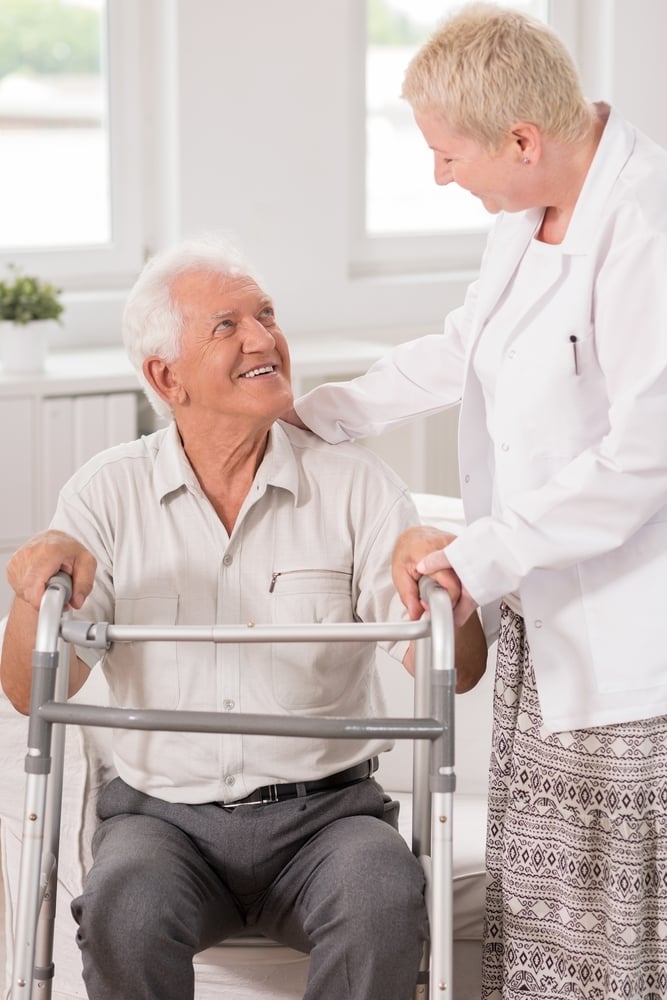
Many returns to the hospital have nothing to do with the condition that caused the first stay. They come from the house: a fall on a loose rug or an unlit stair, a bathroom with nothing to hold onto, a kitchen nobody has been able to keep clean, medications and meals with no one to keep them on schedule. Clutter, poor lighting and missing supports such as grab bars are documented fall hazards, and modifying the home is a documented way to lower that risk.
That is the part of the discharge Seniornicity takes on, directly with the patient and family:
- A senior home safety inspection before she comes home. Seniornicity connects the family with a home safety inspector who specializes in senior home safety, not a general handyman, so the hazards that send people back are found and addressed before the first night, not after the first fall.
- The modifications, done. Grab bars, lighting, thresholds, bathroom changes and whatever else the inspection calls for, coordinated with home modification professionals from the Seniornicity network.
- A clean, supported household. Non-medical caregiver agencies for housekeeping, meals, errands and daily routine, so an unclean or unmanaged home does not become the reason for the next admission.
- One consultant who stays. The Seniornicity Transition Consultant works with the patient and family through the weeks after discharge, so the family's time and attention go to her recovery instead of to logistics.
With the inspection done, the modifications made and care in place, the preventable, non-medical reasons an older adult ends up back in a hospital bed are addressed before they happen. Seniornicity does not provide medical care; it builds the plan around it.
Sources: Agency for Healthcare Research and Quality, HCUP Statistical Brief 307, readmissions by payer, 2020 data (Medicare 30-day all-cause readmission rate 17.0 per 100 index admissions, average cost $18,100, aggregate $36.2 billion). Centers for Disease Control and Prevention, older adult falls data (one in four adults 65 and older falls each year; 3 million emergency department visits in 2021; a fall doubles the chance of falling again). Haddad et al., Injury Prevention, 2024 ($80 billion in non-fatal fall costs in 2020; Medicare pays 67 percent). National Council on Aging, Get the Facts on Falls Prevention.